Wednesday, August 11, 2010

New Bands - Ethan Ash


So, there's a new chap in town. I'm not sure which town, because neither his MySpace page or his press release reveal it, but I can assure you he's most definitely kicking up a fuss somewhere in the UK. The chap in question is named Ethan Ash, and he might be an adolescent to the music scene, but he's seriously talented.


Ethan Ash's music is something fresh, new and genre-defiant, and he seems to mesh all the good aspects of soul, pop and acoustic music together to create something inherently marketable but also totally distinctive. I'm not even sure I like soul. I'm not even sure if I've ever really listened to soul. But somehow Ethan's brilliant sounds make me want to.


Armed with an amazing voice, great guitar riffs and charming good looks, this might be the first you've heard of Ethan Ash, but you're sure to hear more very soon, I can assure you.

Monday, April 26, 2010

Witnessing This Terrifying Century


Flickr user: The Infatuated


The writer isn't made in a vacuum. Writers are witnesses. The reason we need writers is because we need witnesses to this terrifying century.

- EL Doctorow


When unraveling the complexities of global poverty, most social scientists will tell you that there’s no substitute for cold, hard research. What they want, as Dickens’ Gradgrind put it, is Facts. However, a handful of policy makers are beginning to think that the work of Dickens’ cultural heirs could prove just as enlightening. In a paper entitled ‘The Fiction of Development’, the London School of Economics’ David Lewis and Dennis Rodgers and the World Bank’s Michael Woolcock argue that novels and poetry can complement traditional academic research “irrespective of which one is more “truthful””.

Novelists have made these sorts of arguments before. It’s over twenty years since EL Doctorow declared “There is no longer any such thing as fiction or nonfiction; there’s only narrative.” However, it’s proving to be a more problematic idea when placed in the field of social policy. Tom Clougherty of the Adam Smith Institute balks at the suggestion, saying: “Fiction absolutely can't replace factual, evidence-based analysis.” His argument seems to be with the epistemological value of fiction: “There’s a problem. Fiction works by appealing to people’s emotions, not their intellect or rationality.” Perhaps he has a point. The historian Antony Beevor has written of the dangers of blurring fact and fiction. The power of narrative to illuminate a truth about the world carries the corollary danger that a story which rings true can just as easily mislead us. If we rely too much on novels to teach us about society, are we in danger of falling into the same trap as the citizens of Jorge Luis Borges’ Uqbar, willing the world to fit our collective imagination?

If there is a risk of being led astray by a good story, it is not a risk that is limited to literary fiction. Speaking recently, David Lewis gave the example of ‘Broken Windows Policing’, a “story” about the way the world works which, despite a lack of empirical evidence, convinced many policy makers.

Furthermore, Clougherty does literature a disservice by claiming that fiction doesn’t appeal to our “intellect or rationality”. The best of literary fiction speaks directly to the intellect, and it reaches a far larger audience than any policy paper. As Byron put it, well chosen words can make “thousands, perhaps millions, think”. Khaled Hosseini’s ‘The Kite Runner’ is just one recent example in the development field. After selling over 10 million copies worldwide, it is credited with doing more to educate Western readers about life under the Taliban than any academic or government initiative ever could have.

But literature isn’t just useful for policy makers because it keeps them in touch with popular discourse. Fiction has the ability to portray tangibly the issues which dry research struggles to capture, and is arguably better at understanding how individuals are affected by multiple, interlinking factors. From increasing migration and the growth of cities to multiculturalism and climate change, the challenges of international development are mirrored in literary fiction. Some writers even draw on academic research directly. Monica Ali has acknowledged the debt her Booker-shortlisted novel ‘Brick Lane’ owes to ‘The Power to Choose’, a study of female Bangladeshi garment workers in Dhaka and London conducted by Naila Kabeer of the Institute of Development Studies.

‘Brick Lane’ is one of the novels Lewis, Rodgers and Woolcock include on their suggested ‘reading list’ for development policy makers. The list includes what could be called “voices from the developing world”, such as Chinua Achebe’s ‘Things Fall Apart’ and Mario Vargas Llosa’s ‘Conversation in the Cathedral’, but also Western writing which reflects some of the more unpalatable dimensions of development. JG Ballard’s ‘The Day of Creation’, which features a delirious World Health Organisation doctor, makes it onto the list as does Joseph Conrad’s ‘Heart of Darkness’. Conrad’s reflection that “the conquest of the earth, which mostly means the taking it away from those who have a different complexion or slightly flatter noses than ourselves, is not a pretty thing when you look into it too much” is the sort of ideological self-examination that policy writers tend to avoid.

What Clougherty and other critics seem to miss is that even the most number-crunching of social scientists is in the business of offering up a competing story about the way the world works. Fiction writers do the same while providing the narrative which can turn a statistic into a tragedy. William Faulkner once said that the best fiction is far more true than any journalism, and we can surely extend that to cover academic papers. Fiction teaches us, as even Gradgrind learned eventually, that there is more to the truth than facts.

Sunday, January 24, 2010

Adelaide's Cape to tour with Alessi's Ark and First Aid Kit


2010 sees the rise of a new face on the burgeoning folk and acoustic scene, and he goes by the name of Adelaide's Cape.

You can hear his songs via this link, and you can become a fan on Facebook via this one.

Next month, he heads out on support tours with Alessi's Ark, Rachael Dadd (of Whalebone Polly) and First Aid Kit, with dates as follows:

6 Feb Union Chapel (midday gig), London
6 Feb The Luminaire, London
7 Feb The Old Queen's Head, London
10 Feb Moles Club, Bath
12 Feb Cube Cinema, Bristol
14 Feb Portland Arms, Cambridge
18 Feb The Birdcage, Norwich
20 Feb The Hope, Brighton
21 Feb Nation of Shopkeepers, Leeds
22 Feb Bungalows & Bears, Sheffield
24 Feb The Basement, York
28 Feb Hamptons Bar, Southampton
1 Mar The Hawley Arms, London
2 Mar Norwich Arts Centre, Norwich
6 Mar EP Launch @ The Luminaire, London
7 Mar Hamptons Bar, Southampton
8 Mar Instore @ Puregroove, London

New EP 'Last Sleep In Albion' is out on March 8th through Dustbowl Records, and can be pre-ordered by clicking here. You can keep up to date with the latest EP news by joining this dedicated Facebook group.

Saturday, December 12, 2009

Introducing Adelaide's Cape


Every now and again, you come across an act that is truly unique and inspiring. It's not often that it happens, but when it does, it's incredibly rewarding. Enter Adelaide's Cape.

This nu-folk performer / sometimes duo / sometimes band is astoundingly good. Effectively, Adelaide's Cape is frontman Sam Taylor and a selection of other occasional musicians, most prominently percussionist and singer Hannah Richardson. Born as a school-related musical project on the outskirts of Norwich back in '06, the past twelve months has seen Adelaide's Cape become quickly established as part of the London wave of acoustic-slash-indie-slash-folk scene to massive acclaim.

After signing to independent alternative label Dustbowl Records a few months ago, Adelaide's Cape released their debut 'Curled / Harbour' as a free double A-side digital single. You can download the two tracks here for free: 1) Curled / 2) Harbour.

2010 is set to be a year of excitement for Adelaide's Cape as they release their debut EP on with a bang at London's Luminaire on March 6th, tickets for which can be purchased here. Joining Adelaide's Cape for this gig are Pete Roe, Laish Quartet and Alex Sheppard. Adelaide's Cape take to the road at the end of March, with a full UK / Irish tour, details of which will be announced soon.

You can listen to the track 'Rush Hour Wind' from their forthcoming EP via the YouTube video below.


Adelaide's Cape are definitely ones to watch in 2010, so get a head start and check them out over on MySpace, Last.fm and Facebook.

Wednesday, December 9, 2009

Olly The Octopus Christmas Single


Folk troubadour and political commentator Olly The Octopus is doing something a little different this Christmas, with the unveiling of his debut single 'A Call To Arms For Hippies', released next Monday 14th December through Kind Canyon Records. The track will be released as a charity single in aid of MAP (Medical Aid for Palestinians), just in time to compete with the eye-roll worthy X-Factor finalists in the Christmas charts.

Olly is best known for his adventurous musical antics infiltrating everywhere from London's Scientology HQ to one of Boris Johnson's Mayoral Assembly in Bromley. All of his antics have been captured and indexed on his YouTube channel, viewable by clicking here.

'A Call To Arms For Hippies' is fantastic. Equal parts talent, humour and originality, this debut single shows yet another brilliant section of London nu-folk goodness. Having previously produced releases by Emmy The Great and Stars Of Sunday League, it's no surprise that this is one of the most defiantly creative singles of 2009.

The single is available to pre-order over at www.eardepartment.com and will be available to buy both there and on iTunes from next Monday 14th December. You can listen to the track and see the video for it below.

Tuesday, December 8, 2009

Laura Marling & Johnny Flynn

It's been a good long time since I posted anything on The Comment Tree. Apologies for this - my hectic lifestyle has gotten that much more hectic this year! Rest assured, however, that 2010 will see many more posts containing many more brilliant artists...

To kickstart the process here in 2009, however, I have a couple of massively exciting things to share with you. Firstly, we have a brand new Christmas single from the beautiful Laura Marling, and you can listen to it here. The song is called 'Goodbye England (Covered In Snow)' and will sit well amongst anyone's collection of Marling songs. It's this fine young lady at her very best, doing what she does best, and it's wonderful. Take a listen, and make sure you buy a copy next Monday 14th December - even if only to keep those dreadful X-Factor types away from the Christmas Number #1 spot...


And in addition to Ms. Marling coming back onto the scene, the lovely Johnny Flynn has just released the brilliant follow up to his debut album 'A Larum'. This follow up comes in the form of the Sweet William EP, a gorgeous 4-track offering that will capture your heart and cause you to inadvertendly hum at the bus stop until the end of week. And after. For a limited time only, you can listen to and download for free the track 'Drum' from the new EP by clicking here.


Tuesday, September 8, 2009

Glade Review

Not sure about the rules on re-posting.

So just go here.

http://www.timeout.com/london/connect/music/blog/61/bleeps-beats-and-bloops-its-our-glade-festival-round-up

Wednesday, May 13, 2009

Remembrance of Things Past: John Peel, Mark E. Smith & Gordon Strachan


When I was 13, I used to listen to John Peel while I did my homework. The sound of his voice is one of the snatches of memory that I recall from those nights, a hazy decade ago, like the smell of the wooden desk or the burning light of the desk lamp when I glanced up. I would listen to Radio One incessantly at that age, even forcing myself through the boorish Chris Moyles in my desire to become acquainted with the music which populated the charts. I would stop and start my tape deck, trying to capture my favourite songs, or at least the ones I thought the pretty girls at school would be eagerly discussing the next day.

It goes without saying that by the time John Peel got on air, late in the evening, different rules applied. The girls at school would not be discussing anything that John Peel played, and nothing on his playlist would make it onto the charts at the end of the week. What he played was utterly foreign to my ears, accustomed to either the Beatles and Byrds of my parents or the Britpop of my peers. Some of it would confuse or bore me, some I would adore, but the most frustrating fact, for me, was that he seemed to play things once and once only. I was used to the rapid repetition of daytime Radio One to help me create my mix tapes. With Peel, by the time I felt the pangs of love I was already too late, the songs were gone. With the internet still in its infancy, tracking down music as wantonly obscure as Peel’s seemed like an impossibility to me. Somehow though, two different songs managed to sear themselves onto my memory, although I had no idea of their authors, or indeed even their exact titles. All I knew was that one was about, but certainly not by, a band called ‘The Fall’, and the other was about a footballer named Gordon Strachan.


I was reunited with the song about The Fall a few years ago. It’s by Jeffrey Lewis and it’s called, helpfully, ‘The Legend of ‘The Fall’. The irony, of course, of always remembering a song about Mark E. Smith and his coterie, but never being able to find it, was that in the meantime I spent a lot of time listening to their music, by way of a proxy. The song had been my first introduction to the eponymous band, and the lyrics had been bewitching. “He had a dream rock’n’roll could be given a new brain / Something raw and uncompromising and smart and strange.” Indeed, even Peel himself was name-checked; “John Peel said they were his favourite band because they’re always different but always the same.” The Fall proved to be everything the song promised, but it is Jeffrey Lewis himself who I now adore, after I reencountered him late at night on MTV2’s now sadly defunct ‘120 Minutes’, singing ‘Williamsburg Will Oldham Horror’. That was in 2005, some six years after I had first heard him on Peel, and it was in my subsequent acquisition of his back catalogue that I rediscovered ‘The Legend of ‘The Fall’ and could finally identify its creator.


The second of the two songs John Peel left me took much longer to find me again, but I stumbled across it earlier today and it was that which prompted this torrent of memories. It is a song called ‘Strachan’ by a band called ‘The Hitchers’. It would be a shame if you let the fact that it’s a song about a footballer put you off it, because it’s glorious. Punctuated by raging shoegaze guitars, it does admittedly spend much time describing the wee Scotsman’s role in a mid-nineties Leeds United side, but it is told through a framework of domestic minutiae which will be familiar to football fans and neglected partners alike. She asks “What’s that you’re watching?” He retorts, “A program about art.” Listening to it now it still sounds as exhilarating as it did then, and although The Hitchers seem to have disappeared without a trace, the sound they introduced me to still echoes through the bands listed on my computer’s hard drive.


Which brings me, finally, to Heraclitus and to wondering whether any of us are the same person we were ten years ago. I don’t consider myself to have much in common with that boy, sat over his homework at age 13. We have staggeringly different views of the world, and while we certainly share some memories I have no doubt lost almost as many as I have gained. Our tastes in art would certainly seem to be absurdly divergent. I mean, that kid was into Oasis. Yet for some reason I still get the same pleasure listening to ‘Strachan’ or Jeffrey Lewis now as I did ten years ago when I first heard them. Was I drawn to them then because of some germ of my future tastes, or do I listen to Lewis now because of a seed that song planted in my head, without me even knowing the singer’s name? Perhaps there is simply an illusion caused by my brain filtering out all those thousands of songs I’ve heard and forgotten to create a false sense of continuity, but I can’t shake the feeling that I am stepping into the same stream of consciousness twice.

It’s all John Peel’s fault.


Thanks, John.

Sunday, May 3, 2009

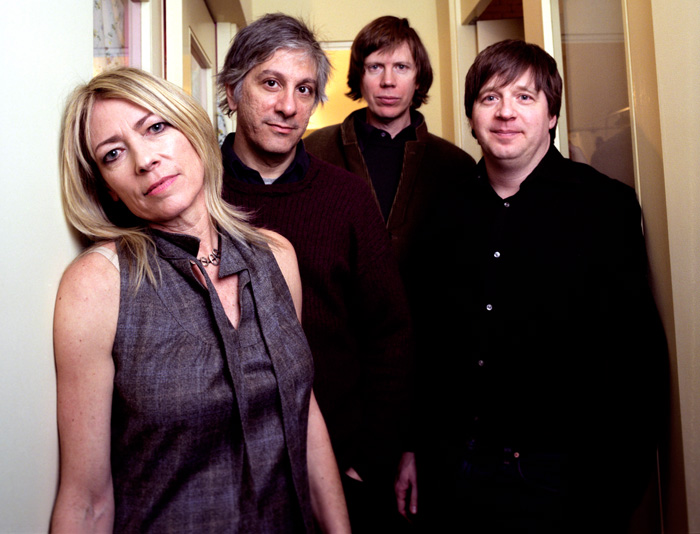
Sonic Youth - Scala 27th April


It’s revision time, picture the scene: I haven’t had credit on my phone for over a month, I’ve had no social life, I’ve been very, very bored. Then for no reason at all, out of the academic textbooks and scribbled notes about political liberalism, I get a text saying something far better than “I’ve been in love with you for months, take me now” or “do you want a free burger king lol” or even “I have a spare ticket to Rome, all expenses paid, come”. No. The text said “sonic youth are playing next Monday at the scala!”

Scala, Kings Cross, London, 19.25pm: Blue skied evening, toothless touts and a diverse crowd lined up round the block to see probably one of the greatest bands of our time.

The gig was opened by Chora who were playing weird stringed instruments (I couldn’t see because they were sitting down) which made harsh droning sounds laced with feedback, accompanied by the drummer hitting out random rhythms which only added to the maddening claustrophobia of the music. I felt as if, by listening to this music, someone somewhere was laughing at me, such was the ponderous and pretentious nature of it. But then something happened about halfway through and the drummer started battering out mind blowingly good tribal beats and jazz fills which brought the crescendo of the (one ‘song’) set to a surprisingly impressive close.

Still, Sonic Youth are who the crowd came to see and as the venue began to burst at the seams with people and the violently strong air conditioning was switched on, Thurston Moore finally entered the stage, nonchalantly stuck a drumstick beneath his guitar’s strings and began to make sweet wonderful noise as the rest of the band emerged. I was grinning like a maniac, stunned to see the legends themselves performing in such an intimate venue. And from the openers of ‘She Is Not Alone’ and ‘Bull In The Heather’, the gig just got better and better. The sound for a start was great; Steve Shelley’s drums retaining a bassy pump to ensure that all the screeching noise still grooved. ‘Hey Joni’ from their seminal and best know album, Daydream Nation, brought up the expectation of more of the ‘good old stuff’ and Sonic Youth didn’t disappoint, playing ‘Tom Violence’ from Evol and two more Daydream Nation classics; ‘The Sprawl’ which was majestically hallucinatory and ‘Cross The Breeze’ which was so aggressive and heavy that it’s hard to believe that each member of the band is pushing (or has pushed) 50. ‘Schizophrenia’ from Sister was also aired and was probably the highlight of my night but I won’t mar it with hyperbole or metaphors; it’s just a fucking amazing song. The hit single ‘Kool Thing’ closed the set with bassist Kim Gordon’s mildly bitter introduction of “When we come back you’ll know all the new songs so we won’t have to play these old one’s” Suffice to say it still rocked like hell.

And I might add that the new album The Eternal, sounds like its gonna be awesome too, much like 80% of Sonic Youth’s back catalogue. In fact they didn’t quite play enough of the new stuff for me – where were ‘Incinerate’, ‘Pink Steam’, ‘Diamond Sea’, ‘Rain On Tin’?? Either way it was an incredible performance. I’ve heard that Sonic Youth can be iffy live; choosing to perform feedback for an hour instead of doing any songs but at the Scala they graciously played a career-spanning set with fantastic energy. My ears began to hurt during the gig (and trust me, I know loud; I’ve seen My Bloody Valentine) but it didn’t matter because it was so incredible. Ear damage from Sonic Youth is better than no ear damage I say.

Jerry’s final thought: Thurston Moore hasn’t changed his hairstyle since the early 80s. Is that the key to the brilliance of Sonic Youth? The Samson-like power of Moore’s mop?

A once in a lifetime experience and well worth the admittedly obscene amount of money I paid for my ticket.

Monday, April 20, 2009

Skream vs La Roux in Let's Get Ravey showdown.

It’s the biggest tune of the year so far, already bigger than Midnight Request Line and more ubiquitous even than Benga & Coki’s Night. From the grimiest dubstep nights to the cleanest R&B bars, Skream’s remix of La Roux’s In For The Kill is smashing up every kind of dancefloor across the country. The Let’s Get Ravey remix represents everything that is so exhilarating about dubstep. In comparison, the forgotten original sounds like someone’s idea of a bad joke. When you’ve heard the ominous and heavy tones of the remix the original feels like a bad GCSE music project produced on a discount Casio-keyboard. It’s all cheap synths and chirpy snares. This is the great hope of 2009? Synth girls, electro-pop and the 80s revival? When it’s done this badly it makes people re-evaluate, maybe the 80s were a bit shit the first time around…

When Annie Mac first played the Let’s Get Ravey remix on Radio 1 even she didn’t recognise exactly what she’d done. How often is dubstep heard on mainstream radio? Let alone the old skool drum and bass that breaks out for the finish. The response she got was completely unexpected. Something about the combination of those incredible vocals with Skream’s impossibly heavy production fostered a real connection with people. Nineties ravers, dubsteppers and drum & bass heads have united with the pop crowd in unanimous affection. The remix has been downloaded from NME’s website alone 700,000 times. It has reverberated through the internet and awakened the raver in all of us.

Skream made the wise decision to remove everything but Elly Jackson’s beautiful voice. Counter to most people’s perceptions of dubstep, the heavy bass doesn’t actually kick in until near the two-minute mark. He lets the tension build. You’re slightly uneasy, haunted by a sadness that’s unrecognisable in the original. Weakened by you’re unease, uncertain of what’s coming next, when the order comes down from the bass-line that it’s time to bounce there is literally nothing else you can do. All who hear it give in to its power. So when Skream lets loose the drum & bass for the last minute, even those in the highest heels can manage at least a half-time sway.
The original in contrast sounds like the theme tune to an 80s Saturday morning cartoon. The beat is just devastatingly light and frothy. It has none of the power or threat that those vocals demand. In for the Kill? Maybe if she’s killing Captain Planet or Optimus Prime.

A remix should always do something new and interesting with a song. It can explore different directions while keeping with the core of the original. A remix is even perfectly within its rights to do much better than the song it’s based on. Last years Crookers remix of Kid Cudi’s Day n Nite was such a beautifully structured piece of dance music that few people who heard it even realised it was a remix. When you go back to the Dot Da Genius produced original, you’re always left pining for Crookers ridiculously bassy wobble. Even though that surpassed the original, and even over-shadowed it, it still didn’t humiliate it. If a remix makes a mockery of its parent track, meaning it’s impossible to listen to without suppressing a giggle at its ineptitude, is that really what the artist would have wanted?

The Let’s Get Ravey remix is inevitably giving La Roux far more exposure than they would have got without it. This with the kind of Rinse FM crowd that wouldn’t previously have got past the weird French name, let alone the Erasure-influenced synth-sounds. That cross-over success is probably good for Elly Jackson’s career at least in the short-term. With an album due out this summer though, the other less visible half of the duo, Ben Langmaid, has some important production decisions to make. If they continue with this faintly ridiculous direction in the face of the overwhelming power of Skream’s remix, they risk a tremendous backlash. If Elly Jackson’s smart, she’ll immediately relinquish her professed love for the 80s. She’ll say she thought Gary Numan was just a Mighty Boosh extra and Erasure were a mistake in need of erasing. She should kindly ask Ben Langmaid to pack his bags. Following that she should march to South London and beg Oliver Jones AKA Skream, to produce her debut album. He claims to have 8000 songs in varying stages of development, how much would it take to throw 10 or 15 her way? An entire album combining Elly Jackson’s stunning voice with Skream’s seemingly limitless musical imagination, surely a prospect music-fans everywhere should pray for.

With hindsight, having the remix as a b-side to the single was a tremendous miscalculation. The juxtaposition of the sublime with the ridiculous is devastating. The idea that dance music needed an injection of the 80s now seems absurd. Dubstep has proven definitively that it is anything but a fad; it is an international movement that is here to stay. It is the sound of the future and with just one remix it has swallowed 80s revivalism whole.

Mawkin Causley - The Awkward Recruit Review

Given the fact that the folk music scene of the last eighteen months has been taken over by a breed of folk-indie hybrids, I was beginning to think that my journey of discovering new traditional folk artists was over. My fears, however, were unfounded, and Mawkin Causley's latest offering, entitled 'The Awkward Recruit' proves just that.

'The Awkward Recruit' is magnificent; from the fantastic instrumental integration to the classy, polished vocals (which switch between a variety of medieval languages - clever stuff, I assure you), there's something tantalizing and unique about what this band does. Mawkin Causley are undoubtedly the best pure folk band to land in my CD pile for ages; think Bellowhead in their infancy, with a little more zest.

This jolly and rather underrated band consist of five members, and are the product of Navigator Records - the label responsible for Lau, Spiers & Boden, and Bellowhead themselves, among others. Armed with an accordian, a bass, a guitar, a fiddle and a melodeon, Mawkin Causley are definitely a band to check out, love, and tell all your mates about. 'The Awkward Recruit' is out today, and the title track 'The Awkward Recruit' can be listened to below.

Listen To 'The Awkward Recruit' by Mawkin Causley

-Lauren Razavi

Wednesday, April 15, 2009

David Byrne's My Eyes - Royal Festival Hall 12th April


The Royal Festival Hall is a genteel venue. It basks in self-assurance, knowing that it hosts the most elite cultural events in the UK. So who was performing this night? Philip Glass? The Vegetable Orchestra? Prinzhorn Dance School? No, it was the man who yelled maniacally of his host city: “Think of London, A small city, Dark, Dark in daytime“.

Sometimes the sun just doesn’t come out in London, but I can personally assure you that it’s not dark here in the daytime. So what was such a lyrically frivolous little scallywag doing in a venue more used to riff than raff? Well, when I tell you that twas none other than former Talking Head David Byrne you will understand all. Yes, David Byrne; the man who has made a career out of a mind boggling fusion of funkypunky afro pop with lyrics that the pseuds could really dig their teeth into.

Byrne was at the Royal Festival Hall on the London leg of his world tour to play a selection of songs he’d composed over the years with the musician/producer/godfather of ambient/general legend Brian Eno.

Beginning with some newer material which (heathen that I am) I wasn’t familiar with, Byrne and his band were certainly rocking and for those with ADD, the stage-show was brilliant. This featured three dancers prancing and flouncing around to the songs, interacting with the band and providing visual relief from their static posturing. I would have liked to know if there was some sort of concept behind the dances but I had to content myself with appreciating the apparent spontaneity of it all whilst acknowledging that it had all been very carefully choreographed. Indeed at one point, one of the dancers leapfrogged over David Byrne himself who, suffice to say, also joined in the dances by shuffling robotically round the stage and following bizarre conga lines of pretentious dance-school whimsy.

For the first half of the gig the polite, largely middle-aged crowd tapped their feet approvingly of Byrne’s newer material. However when Byrne started dropping the old stuff, a few of the less inhibited members of the audience jogged down to the stage-front and began dancing in a rarely displayed passion of white, middle-class levity. Those of a less extroverted persuasion (i.e. 98% of the rest of the audience) stood up in our seats and jiggled and clapped along to fantastic ‘classics’ such as Born Under Punches, Once in a Lifetime, Crosseyed and Painless, Mind and Life During Wartime.

I was impressed by Byrne’s gracious airing of these songs which, lets be honest, he must be sick of by now. Ever the professional however he played them with sincerity, knowing full well that most of the crowd had come in the anticipation of hearing some old Talking Heads stuff. He could easily have been a curmudgeonly old bastard and only played his new nose-flute concertos like some of his miserable peers who deludedly think people care about their new albums. But he didn’t. He played the hits and that is commendable.

After three, count ‘em, t h r e e encores, the band bowed humbly and jogged offstage and, my eyes at least, were full of blind spots from where Byrne’s crowning feature of his awesome white quiff had seared itself into my vision with its disco-ball glow. The man is a legend and it was a pleasure to see him perform with such energy, wit and conviction.

Monday, April 13, 2009

Bat for Lashes - Two Suns


From the opening track of Natasha Kahn’s new album the conflict within is apparent. The words “A thousand crystal towers/A hundred emerald cities” are the sort of fantastically weird lyrics you’d expect to find in the most wilfully obscure pysch-folk song. Here though, even though the soundscape is built from various unplaceable and unusual sounds, the heavy tribal drums are undeniably funky. When the chorus crashes down on you the difference between Bat for Lashes first and second album becomes apparent, that difference is pop.

Kahn’s first album, Fur and Gold, was somewhat surprisingly beaten to the Mercury prize by Klaxons Myths of the Near Future. Fur and Gold was a confident and accomplished debut, full of metaphor and strange narrative. Although some of that did make the album fairly inaccessible. In Two Suns, gone for the most part is the spoken word and some of the mysticism. Two Suns is a rare case of a small injection of pop doing some real good to the music.

Lead single Daniel has been all over the interwebs for a few months and it got bloggers and bloggees very excited. The effortlessly catchy hook meant it was posted and re-posted. The thoughts were that if this was the direction she was going in there’d be major, and possibly mainstream, success waiting for Natasha Kahn.

To some extent this seems likely, but Two Suns is not without its faults. Ethereally obscure music can be admirable, but if it fails to connect on an emotional level then people simply won’t listen to it. On Good Love Kahn tells us in slow deliberate spoken word, “I drove past true love once, in a dream/Like a house that caught fire, it burned and flamed/Then the magician disappeared/As quickly as he came.” Poetic perhaps, but it does err on the side of parody. Throw in a moaning organ as backing music and she’s certainly lost at least this reviewer.

Kahn’s voice has always had a lovely quality of a kind of longing to it. When put to work on wilfully sad songs, like her previous album’s Sad Eyes, or Two Sun’s The Big Sleep, the effect is a calculated and powerful melancholy. On Pearl’s Dream though, it is set it loose on the dance-beats provided by Yeasayer’s Chris Keating. That undeniable aching in her voice lends the song a serious edge, so when they rock out with the synths it’s not too funked up.

It’s a shame to revel in an experimentally exciting artist being reigned in and perhaps a little tamed. Obscurity does not correlate with a lack of quality, and accessible frequently holds hands with the shit. Yet with her instinct for impenetrable physch-folk being directed down a path that is frankly a lot more fun, far more people will be interested in the music she’s making. That path is of course fraught with danger. Any further down the pop road and the magical metaphors will be mightily misplaced. Two Suns though, is still a wonderful balance of the two disciplines and overall a great addition to the recently barren stable of physch-pop.

Thursday, April 9, 2009

Owl Parliament - 21st February


It had a confusing name. Bewilderment was the initial reaction of me and probably everyone who went. What the hell is an Owl Parliament? Why are there Owls? Have they finally agreed to representative government? Answers to these questions were not forthcoming, but I bought a ticket immediately after seeing the incredible line-up for what was billed as an indoor folk-festival. At £24 this was a bonafide folk bargain. Three of the best folk musicians out there, a couple of other really good folks and like four I’d never heard of. None the less at that price I’d pay just to see a Jeff Lewis gig, throw in his Junkyard Band, Herman Dune as well as Laura Marling and this looked like the gig deal of the decade.

The venue was an excellent choice. The Union Chapel is just the kind of magical place that suits an indoor folk festival. The acoustics are good and the stained glass windows lend a hint of majesty to music that sometimes ventures into the ethereal. Be advised though, at the next Owl Parliament make sure you bring the cushion they suggest to, ten hours of music plus rock hard wooden pews equals genuinely sore arse.


With it being a festival I emerged from my tent kind of late, so I missed the first two acts. I can’t review music I didn’t see, but my friend was there from the start and she saw We Aeronauts. She had this to say, “I was watching them and I wasn’t sure about it. But then I’ve definitely decided, they are in my top five worst bands I’ve ever seen live.” What she meant was that they were in the worst five bands she’d ever seen live. Far be it for me to quibble, I wasn’t there, I can only report from the secondary reading and she did not elaborate.

The first band I did see was the lovely Planet Earth. Their brand of low impact thoughtful folk was a nice way to start the day. They’ve developed a small cult following for their gentle melodies, but Planet Earth stand out from the plethora of young British folkers due to lead singer Sam’s nonchalant voice and clever lyrics. His words are often tinged with that anti-folk literality that is becoming ever more commonplace. At Owl Parliament they were good, but didn’t really get much better. Perhaps their nonchalance was too pronounced or their melodies not enough so, but their pleasant set wasn’t particularly memorable, especially in light of the folking amazing music to come.

Next up was the real surprise of the day, Mechanical Bride aka Lauren Dross and co. Her inventive stripped down version of Rihanna’s Umbrella got a lot of airplay last year, but other than that Mechanical Bride are relatively unknown, at least I hadn’t heard of them. They put on a genuinely exciting performance. The rousing haunting percussion and the interestingly unusual melodies were threaded through the constant of Lauren’s powerful voice. This reassuringly loud voice was given centre stage when she played See Worlds on only her glockenspiel. It was an accomplished performance but left me pining for the rest of the band and their percussion, a theme which was to continue throughout the day.

First though, was Peggy Sue, possessors of a hearty backing band with drummer et al. The mockney accent always seems a little forced and Kate Nashy, but I’m told that is their real accent so I suppose I can’t hold that against them. Their vocal harmonies are nice, but not strikingly original or varied. A real miscalculation came when they chose to hammer out a rhythm on an old wine box. This while a full size drum was standing less than a foot away! The wine box did not sound good, and the presence and proximity of that perfect percussion was practically panto. That being said their cover of All N My Grill by Missy Elliott went down very well, even if it was a bit folked up.

After a short break we had the male pin-up of the UK folk scene (at least he is vying for the title with Charlie Fink from Noah and the Whale), Johnny Flynn. The customary whistles and screams from the crowd greeted his first appearance. It was a real shame that his fantastic backing band The Sussex Wit didn’t follow him on stage. The old British folk style that they play is quite distinct from the contemporising done by their contemporaries, and just Johnny and his guitar lacked the complexity and depth that The Sussex Wit brings. Flynn played little new material. This was perhaps due to the nature of the day, with many if not most people there to see people other than him Flynn could play those tried and tested classics he’s been singing for a couple of years now. Of particular interest was his solo rendition of Tickle Me Pink, a delicate and beautiful number that is incidentally one of the finest comedown songs ever written. Where Flynn really lost marks was on his stage banter, his exquisitely terrible words were as follows. “I hope you enjoy the rest of the day… and… um… the rest of everything.” An undeniably pretty boy, but perhaps not much of a thinker?

Laura Marling has grown in stature and age in the past year, if not in actual size. With new hair and red lipstick she looked, if at all possible, even more like a porcelain doll than usual. Yet make no mistake for this is no fragile creature. Her voice is incredible, so much so that it has me labelling her, probably naively, as this generation’s Joni Mitchell. Her new material sounds suitably stunning, Rambling Man in particular. Although Laura too came with none of her friends, thus I reserve judgement on the new stuff until I’ve heard it with the full band. Marling is an incredible talent but when matched with the similarly talented Marcus Mumford, who normally does her backing vocals, the music has a power greater than the sum of its parts. The solo version of Ghosts in particular left my ear pining for the complexity I’d become accustomed to.

Jeff Lewis was eleven. The man quite frankly smashed it. He had The Junkyard band along to play with him and they tore up the stage as they turned it up to eleven. Sitting as I was on the first floor, Jeff’s fairly noticeable balding patch completely vanished as he bounced around the stage. The Crass covers he did went down phenomenally with the crowd. A Short History of North Korea was just brilliant. Here Jeff held up the comic he drew himself and sung along, actually giving the audience exactly what the song title suggests. In addition, Jeffrey Lewis’ crowd banter was hilarious and involving without being intrusive. Every label, both major and minor, should give lessons in stage banter with head-lecturer Professor Jeffrey Lewis. The real treat of the day was The Chelsea Hotel Oral Sex Song, a six-minute post-modern song about music, sex, love and song writing, all contained in a short anecdote about standing outside the Chelsea Hotel. It is to my mind one of the best songs written in the past twenty years. Jeff rarely plays it, he says this is because he’s worried he’ll forget the lyrics. Not a word was out of place here however, and it capped off a performance that was nothing short of amazing.

Last on the billing was Herman Dune, these French anti-folkers were an impressive if not stellar end to the day. One of the difficulties of Herman Dune live is that it’s sometimes quite hard to hear what David’s saying. If you’ve heard all of their many albums and know all their lyrics then this isn’t much of a problem. Such was clearly the case for a girl on the third row, who seemed indeed to know all the lyrics to every song of every band. For the rest of us though, some of the subtleties of Herman Dune’s playful lyrics are a little lost. Of course the strength of the tunes as always shone through and David’s languid almost insectoid stage presence was a joy to behold.

Owl Parliament was a monumental day of some of the world’s finest modern folk music. A call for more backing bands would probably be met with a rebuttal about much longer waits in between sets. All that is left to say is next year, should the line-up be but half as good, you should definitely make it down to The Union Chapel for some Parliamentary goodness. I for one will be joining you, although next time accompanied by a fairly hefty cushion.


Sunday, January 18, 2009

Little Boots Interview


It isn't the despairing screams of a million unemployed graduates. It isn't the crispy crackle of a credit crunch, nor even the icy blast of a financial freeze. The sound of 2009 is synthesisers and sequencers; it is a Blackpool accent and diminutive footwear. It is Victoria Hesketh aka Little Boots and she is the future of pop.

The death throws of bad guitar pop are still echoing through the charts, but in the coming months the electro-pop revivalists will smash the big time in a big way. Lady Gaga, La Roux and Passion Pit are just a few artists whose stars are set to shine. Little Boots though, has been picked ahead of all of them. She's been hyped for a while now and this month she came top of the BBC Sound of 2009. An industry wide poll of tastemakers that last year tipped Adele and Duffy for the top.

Little Boots is a small northern lass with frighteningly blonde hair and an ethereal amount of glittery mascara. With classical training from the age of four, she's been making music for years. She built a fan base on the internet through posting videos of herself playing covers on her Tenorion, an instrument made of light. It sounds perhaps more exciting than it actually is, the Tenorion is simply a sequencer with an LED panel on the front that visualises sounds. It seems though, like an original way of making music, so I began by asking Little Boots how if affected the way she produces music. I'm immediately met with a look of tiring exasperation, she's clearly been asked it before, and I sense a hint of dismay as if people think her sound revolves around this gimmick. "I don't use it to write and I don't use it in the studio, the internal sounds aren't very good so you might as well use a good sequencer on the computer in the studio. So it doesn't really affect the way I make music, but they way we play it live is completely affected by it. It's kind of the brain of it. We programme and upload all our samples and basslines and things like that. It's really great for live shows because it's really visual, with electronic music it's difficult to play it live."

About a year ago Little Boots wrote a song, Stuck on Repeat, that she originally intended for Kylie to sing. A demo was given to Joe Goddard (Hot Chip's superproducer) by a friend of a friend, much to her embarrassment "it was shit, I recorded it on a terrible mic on to Garage Band." Yet he loved the song and worked on an improved version, "the idea of it was already there, he just expanded all the themes and made it a lot more exciting." Stuck on Repeat is undeniably infectious, it was rinsed on dance floors across the country last year. The 7-minute extended mix is a beautiful piece of electro-pop. The instrumental introduction builds elegantly, you're hooked on that beat and you only realise you were desperate for the hook when it arrives (perfectly on time) fully two minutes into the track. This contrasts with the fairly derivative radio edit, where the hook is unceremoniously dumped on you barely 15 seconds into the song. The radio edit is an inferior song, but it is a more accessible sound, and when the aim of the game is to sell as many records as possible, pop demands accessibility. Yet music that's made to sell can mean a watered down sound only appealing to the lowest common denominator, with accessibility, to my mind, often equating to inferiority. Little Boots though couldn't disagree more, "the more people that can connect with it the better. I think if you write a good song then hopefully it will connect with all people across the board." Perhaps this is the point then, that is what pop music is about, regardless, Little Boots clearly saw through my bullshit. "I'm not into just doing some like, cooler thing that'll sell like 100 records to a bunch of scenesters in London. I don't care! I'm from Blackpool, I wanna be sold in Woolworths [nb. interview was conducted before the catastrophic demise of a national institution] on the seafront you know? I want my little brother to go in the shop down the road and be able to buy my CD."

With the choruses to Stuck on Repeat, Meddle and Every Little Earthquake all jostling for attention in my brain, I was determined to investigate the idea of catchiness. I wanted to know if catchiness itself was something Little Boots aimed for? "I dunno, I try and write hooks. I like hooks. I mean what's a song without a chorus? I dunno it's just a load of noise innit? I just love choruses. I love big choruses and beautiful melodies that everyone wants to get involved with. The crazy frog is catchy but it's a fucking annoying sound. It's not really about catchiness for me it's more about like classic, like, great choruses. If you can write a chorus that's really catchy but doesn't get annoying. You know those kind of songs that you can put on 20 times and you're not annoyed and you still think they're bloody great? That's normally a sign of a pretty good pop song."

Pop itself is increasingly difficult to define, with a hyphen being spliced between that word and every conceivable genre. Music that is resolutely not pop usually strays in to the realm of the weird. I had always thought that to make an abstract album that remains interesting is a difficult thing to do. Once again Little Boots debased my assumptions. "Pop music really challenges me, it's so much harder than being weird. It's pretty easy to make cool albums or weird albums. You can lock yourself away for a bit and be weird. It's not that hard. It's much harder to write Michael Jackson – Thriller, with an album of number ones."

People who know much more than I do keep telling me that the music Girls Aloud put out is innovative and brilliant. For the record Little Boots thinks "all their tracks sound the same, even though they're all pretty fucking good." My problem with Girls Aloud, and with so many similarly throwaway popstars, is that they don't make their music. They're just the branding that is stamped on what is apparently quite exciting pop music. With their matching dresses and contrasting hairstyles, they represent what I see, however pretentiously, as the anti-thesis of proper music, a total lack of artistic integrity. Little Boots makes music that is sometimes brilliant and often fairly tepid, but she is entirely her own person and her own brand. She doesn't have pop's most powerful voice, but she writes her own songs. Music that is made by people who fully own their sound, that is the kind of pop I can get behind. In response to a question on whether she feels pressured to look or act a certain way she just kind of shrugged, "not really, I just do what I want, I don't really think about it. I suppose girls are kind of pressurised to look sexy or whatever. I mean to be honest I'd rather look sexy than not sexy. But I just like what I like so I wear what I like, which just tends to be crystals and fancy stuff and glittery dresses and that's just what I like. It's not because I think I should try and be something that I'm not or anything like that. I just do what I want, the minute someone tries to tell what to do I just say no."

Thursday, January 8, 2009

The Chairs – November EP


Perhaps 2009 will be the year that truly marks the death of the physical format. Radiohead got the ball rolling with their online release of In Rainbows, history will inevitably judge that as a pivotal moment in music distribution. The Chairs are an unsigned band from Wisconsin and you can download their first EP November, without even the hassle of paying for it! This will inevitably be a route bands take in 2009 and beyond, using free releases to demand music fans and bloggers attention. Using the Internet to build hype is nothing new, although giving away entire albums is rare. With every Myspace wall cluttered with musicians desperately trying to flog their wares, it is usually only the truly exciting bands that make it down this path (the execrable Lily Allen notwithstanding). So are The Chairs good or exciting enough to make it? Well on the basis of this five track EP, they just might be.

Their songs range from the jaunty haunty indie-pop of Polly to the ambient vocal-heavy rock of Fire and Ice, as well as a quiet grunge-tinged I Gotta Go. Lead singer Alex Schaaf sounds a lot like The Weakerthans’ John Samson, although perhaps half an octave lower. His songs are often a strange juxtaposition of mournful and hopeful. The excellent bassist Andre Juan paints the whole EP with a light shade of funk. This is an extremely accomplished debut, it doesn’t sound particularly lo-fi, but it is clear they will benefit from a more equipped studio and some experienced producers. It seems only a matter of time before The Chairs are signed, it isn’t inconceivable that when they are their label may halt the free downloads. The lack of foresight in the record industry never fails to astonish. Go download November now, if for no other reason than to wait till they get popular and say “I only like their early stuff.”

http://www.thechairsband.com

Saturday, December 27, 2008

Hunger - Review


Turner Prize winner Steve McQueen is perhaps one of Britain's most significant artists. He is best known for his work using film, yet Hunger is his first feature film. It is an exploration of life inside the notorious Maze prison near Lisburn, Northern Ireland, in 1981. The experiences of both the paramilitary inmates and the guards are examined, as well as the events up to and including the Bobby Sands-led hunger strikes. McQueen has directed and co-written what is an extraordinary technical and artistic achievement.

After a quiet opening depicting the monotony of a prison guard's life we meet Davey Gillen (Brian Milligan), a new prisoner in the H-Blocks. He begins his sentence at the height of the Blanket and No Wash Protests. The prisoners wanted recognition as political prisoners which would include, among other demands, the right to wear their own clothes. They refused to wear prisoner's clothes and so wore their blankets. They refused to wash or empty their chamber pots. Thus as Gillen is thrown into his cell we see the faeces that is pasted across every inch of his new home. As his cellmate Gerry Campbell (Liam McMahon) demonstrates to him, and us, how to achieve this level of filth, the stench practically fills the cinema.

The film progresses and we follow Gillen through his education at the Maze, the beatings and the humiliation as well as the drastic steps to communicate with the outside world. We also see the experiences of the prison guards. Raymond Lohan (Stuart Graham) is shown as he checks for bombs beneath his car before driving to work. Later an officer weeps uncontrollably as his colleagues in full riot gear mercilessly beat the inmates. It is a desperate and terrible place for everyone within the prison walls.

Sides are not taken and the prisoners are not glorified as martyrs. The reality of the situation is shown unflinchingly. There is no sentimentality; emotions are reined in with just one brief use of music. McQueen does not force sympathy from us. He forcefully confronts us with bleak historical truth that we must consider for ourselves.

McQueen's approach is distilled quite expertly during one 22-minute single take. Having been introduced to Jimmy Sands (Michael Fassbender), we watch as he meets Fr Dominic Moran (Liam Cunningham) to discuss the hunger strike he is about to embark upon. The camera is still, watching the two men as they sit facing each other playing verbal chess for the very highest stakes. The script, by McQueen and playwright Enda Walsh, is almost entirely played out here; the rest of the film has little dialogue. As Fr Moran and Sands sit down to talk, the work done by both actors and writers is worthy of every superlative you can throw at it. Like viewing a great painting I stared at the screen, utterly captivated by the back and forth of the two men. Fassbender embodies Bobby Sands's incredible strength of will and sense of purpose. Doubts flicker through his speech though, as the Republican priest repeatedly questions Sands's motivations and the effect his death will have. The scene is an amazing technical achievement but it never feels epic or grand. It remains simply a conversation, a long, engrossing and important conversation, but a conversation none the less.

The final act of the film is almost entirely dialogue-free. This is the total physical breakdown of a human being. Objects shift in and out of focus while sounds are muffled and inaudible. The shots of Sands's chillingly emaciated body are neither gratuitous nor sensationalist. They are put on screen in an attempt to convey in some way what he went through. As with much of the film the starvation is very difficult to watch, though there is something fascinating about seeing this alien shape as it struggles to move its very eyelids. The end we know from the start, but when it comes the inevitable is still expressed in an interesting and provocative manner.

The only criticism I can offer is that the film provides little explanation of the circumstances leading up to the protest, the acts of the prisoners that led to their imprisonment or the effects of the hunger strikes themselves. Yet in truth it doesn't need this explanation. It is a meditation on the hunger strike and the experience of those in the prisons, as well as a wider look at the question of what it means to truly die for a cause.

In a week when the latest James Bond film is released, there is little question of which film is the better, worthier or more accomplished. Bond is violence glamourised, digitised and belittled - packaged to sell a plethora of products. Hunger is violence at its most brutal, pain at its most visceral and suffering at its most real. I can only urge you to go see this quite brilliant piece of work. It isn't an easy film to watch and it's difficult even to call it rewarding. It is, however, a powerful and tremendously important piece of filmmaking.

Emmy the Great - Interview


Immediately I fail to ingratiate myself with Emmy the Great. She is smiling and more than willing to talk, but press-fatigue is evident in her voice as another ignorant journalist snatches her sound and tries to pin it down in the handy box of definitions he brought along. “Anti-Folk was in New York in the nineties, but that, again, doesn’t apply anymore. When something happens that is a reaction to something, or is vital and crucial for a moment, it dies out really quickly.” Suitably schooled, I avoided further talk of definitions and movements. I had tried to wrestle her music into a little box called folk, but she wrenched it from my grasp and set it free in a Narnia-sized wardrobe named “indie.”

The topic of genre rarely fails to irritate musicians, so I threw the letter D in there and asked if Emmy was particularly conscious of gender when she writes music? “Well, all my songs recently have been about a break up, it’s from the female perspective.” Her songs range from the playfully rude to the sexually explicit. Perhaps people react differently to this frankness because she’s a woman? “I have a male friend who said he heard my album and he felt defensive on behalf of men, he said we’re not all that bad. No you’re not all, but it was just this one person whose character I was trying to assassinate. I found it really interesting that my male friends would listen to my music and get bridled.”
Readers of the award-winning music magazine The Stool Pigeon may know more about Emmy the Great than they think. For a year now she has been writing sporadically under the dastardly cunning pseudonym of Emmy Moss. Although she harbours no ambitions to be a journalist, “it’s really helpful being on the other side. It gives you real insight; I know when not to probe, and I would never be rude to a journalist because so many artists have been rude to me. It’s like, how great do you think you are? I’m interviewing you because you’re in a really cool band and I think you’re really good, don’t be an arsehole about it.” A colourful but short article in the October issue of The Stool Pigeon demonstrates such behaviour. Emmy had tried and, due to his temper, resoundingly failed to interview Yoni Wolf (of the band Why?). Even though he’d previously agreed to do the interview he was unhappy and had, she wrote, “the look of a caged animal about to be experimented on, or someone who is being asked to hand over an internal organ.” Although she displays remarkable empathy when discussing it, “I completely understand, he was in a really bad mood, but you can’t then be an arsehole and expect someone not to write that you were an arsehole. Sure you’re playing the worst venue in Brighton but surely you want to be written about? You make music surely you want people to hear about it?”.
Emmy doesn’t want to take the journalism thing much further, “ if you go too far to the other side you will never be a Jedi.” The dark side? “It’s not the dark side it’s just the other side. When you’re a critic you’re always observing and not just enjoying. When you’re playing music you don’t want to have to see other bands like that you want to be able to interact with them. You have to stop being a critic when you’re playing music.” With an album out in February, her confidence is only growing. “I started taking responsibility for my songs. I used to be like, the song will come out, I’m not gonna look at it, it’s gonna come out and then I’m just gonna play it. Then I started looking at them and saying, I don’t like that and putting something else in because I didn’t like that that line. Taking responsibility for it.” A reputation for spikiness had preceded her, but Emmy proved thoughtful and funny. I for one can’t wait for her first album... it’ll be great!

Nigel Slater - Interview


Nigel Slater belongs in a tiny group of people who are truly beloved, unique and irreplacable (other members include Stephen Fry and David Attenbrough). In a huge simmering vat of food writers, only one is perfectly seasoned. His charming descriptions of food and his serious yet simple recipes effortlessly convey what Real Food is about; pleasure.

In his autobiography, Toast, Nigel describes a childhood remembered through food. From an early age he displayed an aptitude for cooking that, as the book details, often went unnoticed. “I really wanted to be a chef, I wanted the checked trousers and the big hat.” So after four years studying food tech, he went to work as a chef. Anyone who’s worked in kitchens knows they are often quite unpleasant environments. Gordon Ramsay, Britain’s most famous (and for some reason actually popular) chef, is a crude, profane and violent bully. Nigel in contrast, is thoughtful, friendly and incredibly nice, he doesn’t seem like someone who would enjoy the professional kitchen environment. “I was lucky. I worked in small places where there were only three or four cooks. It was at first an enjoyable experience, I liked the people I was cooking with. When I tried to move to a larger, I suppose a more high powered environment, then I really lost my way.” Professional kitchens are often fairly scary and overtly, aggressively masculine places. “It was very aggressive. Also very laddish, very boysy, very sexist, which I didn’t enjoy. But also I think I was out of my depth from a professional point of view, because there’s a difference between cooking, which I was doing previously and which I absolutely love doing, and getting very smart high-powered food out to a restaurant that’s very busy, it’s totally different.”
To the relief of cooks everywhere, Nigel soon made the move from cook to writer. He began testing recipes for a new food magazine, A La Carte, after his editor liked what he was writing in his testing notes, he wrote a few pieces for the magazine. “Then I heard on the grapevine that British Marie Claire was launching and I just wanted those pages, I loved French Marie Claire and I thought I knew exactly what I wanted to do.” Even though he was completely unknown, they decided to take him on. What followed was, to the delight of cooks everywhere, ten published books and numerous magazine and newspaper columns.
Lot’s of Nigel’s book titles use the word “Real.” He’s written Real Food, Real Cooking, Real Fast Food and more. It’s a simple yet powerful description of his cooking. Using simple techniques and good quality ingredients is part of it, but he revels in writing about the joy of cooking. “I want people to understand the pleasure that there is in cooking. I’ve always felt, even when I was a kid, that making something for somebody, putting it in front of them, eating it with them or watching them eat it. I think it’s a huge huge pleasure, what it does to your sense of wellbeing to actually make a meal for someone is such a life-enriching process.” Nigel doesn’t just find pleasure in the finished dish, he always writes of the excitement and enjoyment in the entire process of making a meal. The greedy licking of fingers as you feverishly peel mangoes, the smell of garlic filling the kitchen. Unlike the clinical and cold writing of some better known chefs, Nigel’s focus on the pleasure of cooking makes his writing unfailingly pleasurable to read.

The UK’s food culture has transformed in the past decade. The souffle has risen quite spectacularly, to the point that now, not only are there hundreds of food writers, but the qualification of being married to a chef is enough to net you an eight book deal. With limited shelf-space, the marketable chefs are promoted, while the the others sit at the back of the cupboard like a jar of forgotten yet delicious apple chutney. I wondered how Nigel felt about this cornucopia of food writers? “I don’t think it’s a bad thing, the harm is, I suppose, when somebody hasn’t done their homework and they publish recipes that aren’t workable or they’re not tested. You do see a few where you wonder where they’ve come from, or should I say you actually know where they’ve come from. There’s a lot of people who don’t quite understand about copyright.”
One inescapable element of UK food culture, however fringe, is that gastronomic search for perfection. The quest for culinary ecastasy, spearheaded by pioneering gastronaut Heston Blumenthal of The Fat Duck. This is the use of foams, water baths and mystical alchemy to distil the very essence of flavour. The contrast with Nigel’s lack of fussiness is obvious, how does he feel about this gastronomic revolution? “It certainly is interesting and I don’t have a problem with it if people enjoy that sort of eating, and to a certain extent I suppose I do. The fact that I haven’t been to The Fat Duck probably says an awful lot. But it is very interesting it really is, and whilst I would never put it down, it’s just not something that interests me. I much prefer just sitting round the table with people eating something delicious. Rather than taking it to pieces and analysing every last detail of it. But if you’re in the pursuit of some sort of restaurant perfection, which I think Heston is, then fine all power to you.”
One of the delights of Nigel’s writing, particularly his columns, is the conversational style they’re in. It invites replies and correspondence, something he recieves in abundance. I wanted to know if he ever tries the recipes people sends him. “Sometimes, and sometimes they’re very delicious. Or they will offer an idea about something I’ve made, they make it but then they go off piste and say no I did this or I did that.” Does he try the adaptations? “Sometimes, it depends what it is, last Sunday I’d done a recipe for fig tarts in The Observer, by 1:00pm somebody had sent me a photograph of the tart they’d made, but they’d made just one big one instead of lots of little ones, and I thought yeah that’s a very nice idea.”
More than just being a great writer, Nigel is a fantastic cook. His recipes don’t just make you excited about cooking, they taste wonderful. From his absolutely extraordinary ‘Lentils with Cream and Ginger’ (Real Cooking) to the sublime ‘Stove Top Dauphinoise with Pancetta and Rocket,’ (Real Food), he is a fabulously talented cook. I asked him what he thought makes some people truly great cooks. “I do believe some people are natural cooks, you’d be amazed at the number of people who will read a cookbook or a magazine, they’ll look at a recipe and they’ll think ooh yeah I’ll have a go, then they close the magazine and they’ll make it. They just cook, it’s part of their DNA. They know when something’s going to work, they know how much of something to put in, they perhaps haven’t even been taught to cook.” It’s innate? “Yeah. Sometimes I look at people and I just think I bet you’re a great cook. You can just tell, other people need to be told every last detail, and the scary thing is, people follow your recipe to the letter and that is slightly worrying, when you say cook something for 25 minutes - and everybody’s ovens are different - they take it out after 25 mins and it’s still raw and they think the recipe doesn’t work.”

As our conversation drew to a close, I felt priveliged and honoured. Nigel Slater is more than just a national treasure, he is everything that is good about cooking. He makes cooking fun and pleasurable, not by shouting at you or ramming his message down your throat. Through exqusite recipes, thoughtful prose and empassioned greed, he defines everything that I love about cooking. Before letting him go I had to ask him what he was cooking that evening. “Pork chops with red chard,” he replied, something I’ll buy from the market as soon as I can, because frankly, anything that’s good enough for Nigel Slater, is good enough for me.

Magnetic Man - Gig Review - Scala Oct 08

Like a call to prayer I hear the dark dubstep beats. Knees bending I begin to bounce bounce bounce. Not many people here so early. Dancefloor’s empty. Good. More and more and more room to dance dance dance. Arms and legs and hands, each pop of each part of my body is to a beat.

I’m sweating. I’m thrashing it around the dancefloor. Hmm. Need brief respite. I’m leaving the dancefloor. Oh no. Catastrophe. I’m seeing them now. All of them. I hate them all. You’re posh. You’re posh. You’re a twat. You’re a nob. You’re posher. You’re caked in make up and smell of vanilla perfume. What are you doing here? You’re checking to see who’s looking at you. Why are you here? Get out. So this is it. The end. I’m here in dubstep and it’s being ruined. I’m probably doing some damage myself. I’m too middle class to like this. I’m devastated, this fucking incredible moment in music was all to fleeting. I’m watching the twats as they wrest it away in their dickish look-at-me clothes with their juvenile self-obsession.
I’m back on the dancefloor. Appleblim is playing an impressive support set, albeit with maybe one two many bassy wobblers.
Time for the main act. I’m still dancing, I’m trying to ignore the posh fucks. Skream, Benga and Artwork are taking to the stage, each hiding behing an Apple. I’m being amazed. I’m momentarily distracted by four horrendously confused girls with neon shades and flashing necklaces as they constantly take pictures of themselves. I’m resisting the temptation to throttle them. I’m turning around, sinking into the music. The future sound of the underground is being mixed live before my eyes. Each producer is providing samples and beats and mixing it all together. I cannot resist. I’m moving harder and faster. I’m becoming more volatile. I’m losing myself in dubstep. I’m wanting bass. More bass. I move to the the speaker. More bass. I’m humping the speaker. I’m literally humping the speaker. Uh oh. There’s other people here. I’m embarrassed. I’m leaving. I’m happy.